Monday, 12 December 2022

IELTS test in Algeria – November 2022 (Academic Module)

The questions below were received from our lovely friend N.B. who recently took IELTS in Algeria:

Writing test

Writing task 1 (a report)

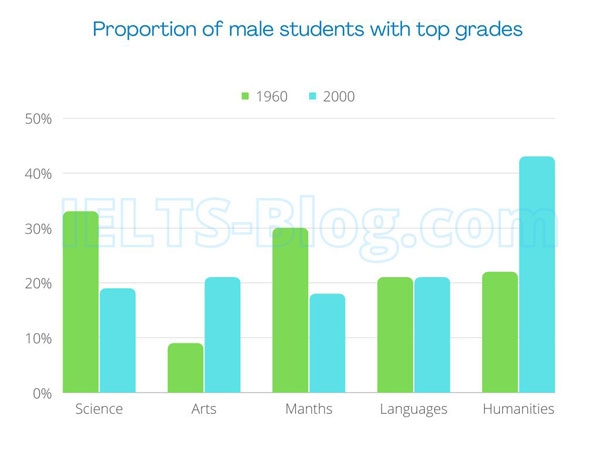
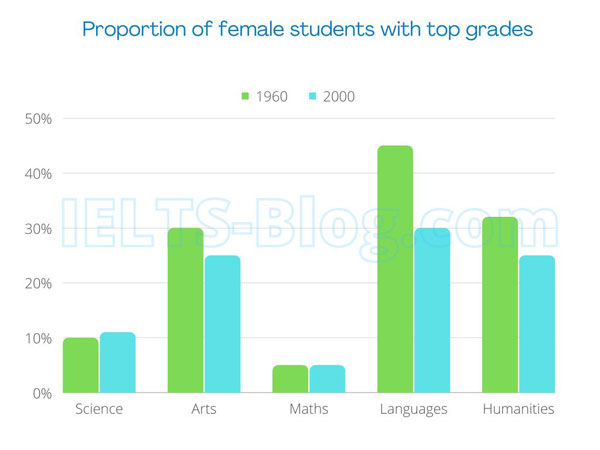
The charts below show the proportions of male and female students getting top grades in 1960 and 2000.

Summarise the information by selecting and reporting the main features, and make comparisons where relevant.

IELTS Writing Task 1 bar chart of male students getting top grades

IELTS Writing Task 1 bar chart of female students getting top grades
* Note: these aren’t the actual charts given in the test, they were recreated for the purpose of demonstration.

Writing task 2 (an essay)

Many people try to achieve a work-life balance but fail. Why is this happening? What can be done to help people overcome this problem?


https://ift.tt/609Mg4i
from IELTS-Blog https://ift.tt/krFcxUD
via IFTTT

Sunday, 11 December 2022

IELTS Report, topic: Bar charts describing the hours worked by men and women in 3 countries

This is a model answer for an Academic Writing Task 1 from the IELTS exam in the USA, shared recently. This response is likely to get Band 8 or 8.5 in IELTS.

You should spend about 20 minutes on this task

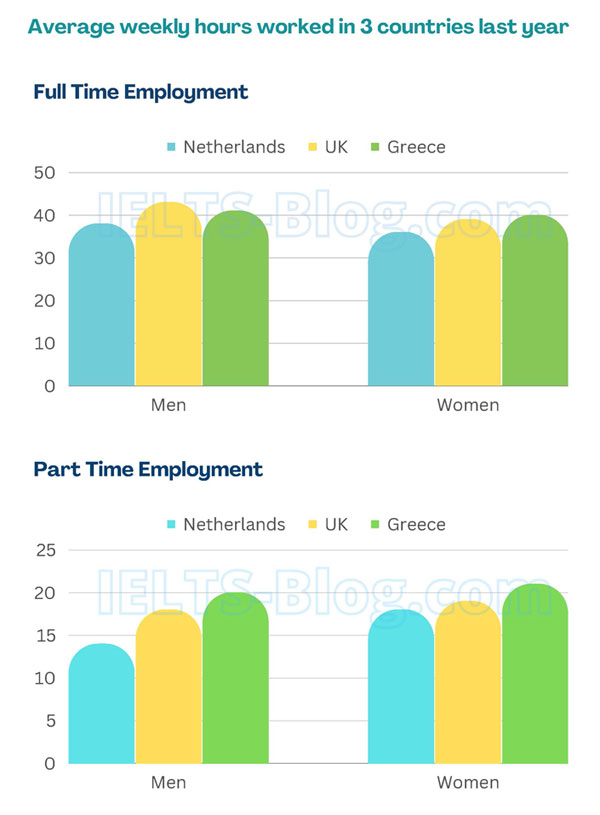
The charts below show the average hours worked last year by full time and part time employees in 3 countries. Summarise the information by selecting and reporting the main features, and make comparisons where relevant.

Write at least 150 words

IELTS Writing Task 1 Bar Charts of Hours Worked By Men and Women in 3 Countries

Band 8.5 Model Answer

The bar charts show the average number of hours that full-time and part-time employees worked in the Netherlands, the UK and Greece in the previous year.

Overall, what immediately stands out is the fact that the number of hours worked by male and female workers was relatively equal for both types of work, and that full-time employees worked almost twice as much as part-time employees.

Taking a closer look at the numbers for full-time positions, the figures for both men and women ranged between 35 to 40 hours per week. Male workers in the UK were the only ones to exceed 40 hours a week. The figures for the Netherlands were the lowest for both genders, at around 35 hours weekly.

Moving on to part-time employment, the difference between the number of hours worked by men and women is more apparent in this chart. People from the Netherlands worked the fewest hours with men spending 10 hours, and women – roughly 15 hours per week at work. The UK had almost equal figures for both genders, around 17 hours a week, while the figures for Greece were slightly higher; the male workers there did around 20 hours per week and female – a touch above 20.

Click here to see more IELTS reports of band 8


https://ift.tt/EWyYZSM
from IELTS-Blog https://ift.tt/AoTl2ag
via IFTTT

Friday, 9 December 2022

IELTS test in Oman, Iran and Sri Lanka – November 2022 (Academic Module)

Three test takers remembered their questions and it turns out they had the same exam in Oman, Iran and Sri Lanka. Special thank-you to N. from Iran for the maps!

Writing test

Writing task 1 (a report)

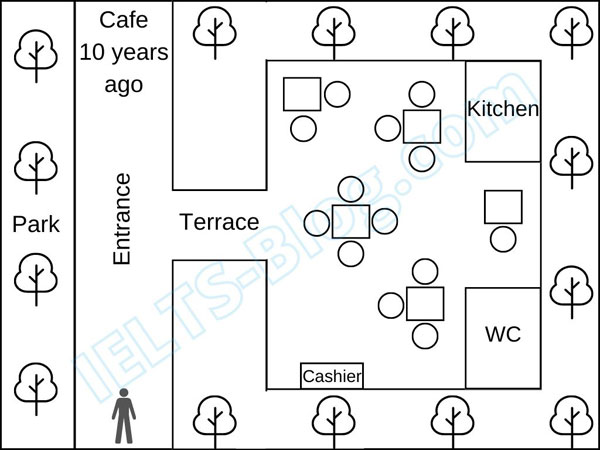
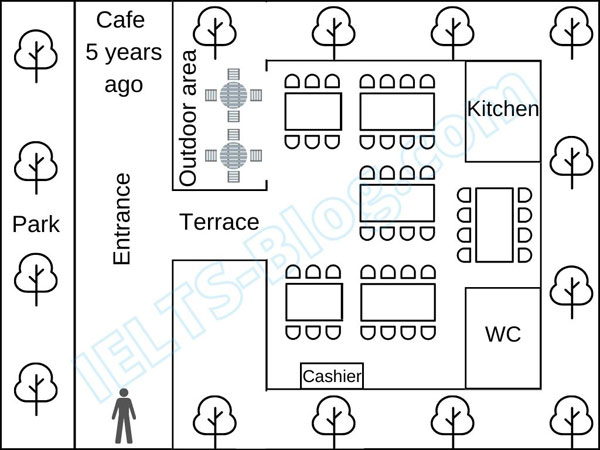
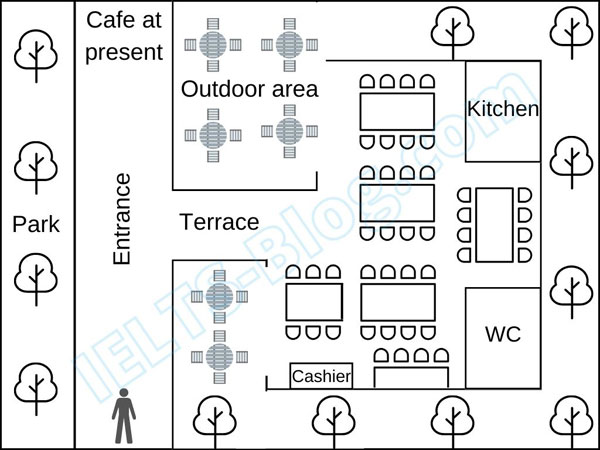
The diagrams below describe the floor plan of a café 10 years ago, 5 years ago and at present.

Summarise the information by selecting and reporting the main features, and make comparisons where relevant.

IELTS Writing Task 1 Cafe Floor Plan 10 Years Ago

IELTS Writing Task 1 Cafe Floor Plan 5 Years Ago

IELTS Writing Task 1 Cafe Floor Plan Now

* Note: these aren’t the actual plans given in the test, they were recreated for the purpose of demonstration.

Writing task 2 (an essay)

Some people think that educational qualifications are important to success in life. Others believe that this is not the only way to become successful. Discuss both views and give your opinion.

Speaking test

Part 1 (Interview)

– What is your full name?
– Do you study or work?
– Do you prefer to do your work in the morning or evening? Why?
– What do you do in your free time in the evening?
– Who do you prefer to spend your free time with?
– Do you think spending leisure time at weekends should be different from weekdays?

Part 2 (Cue Card)

Describe one of your neighbours who you think is interesting. You should say

– who he/she is
– how long you have known him/her
– what relationship you have with him/her
– and explain why you think he/she is interesting.

Part 3 (Discussion)

– Do you think people these days know their neighbours?
– Do you think in urban areas people usually don’t know their neighbours as well as people in rural areas?
– What does national identity mean to you?
– Is wearing some specific clothes or eating some types of food related to national identity?
– Why do you think some people cannot benefit from belonging to a nation?


https://ift.tt/jQoT9B3
from IELTS-Blog https://ift.tt/nKClp8b
via IFTTT

Wednesday, 7 December 2022

IELTS Speaking test in Saudi Arabia, with answers – November 2022

The questions below were shared by S. who took the IELTS test in Saudi Arabia.

Here are some high-scoring model answers for Speaking Test Part 1, to give you an idea how to respond to those questions. You can find Part 2 (cue card) and Part 3 answers on the VIP Club website.

Speaking test

Part 1 (Interview)

1. Do you live in a house or an apartment?

I currently live in a cosy one-bedroom apartment in a high-rise building on the waterfront. It has an open-plan kitchen and a small living room. It’s a bit cramped, but we have managed to make good use of the small amount of space we have. As a matter of fact, my neighbourhood is quite pricey, so I consider myself lucky to have found some reasonably priced accommodation, even if space is tight.

2. Do you have a favourite room?

Well, technically it’s not really a room, but I have always loved spending time on our little enclosed patio. I am not one for fancy decorations, you could say that I am more of a minimalist by nature. So, this space can only fit a small table and chairs, and I also use it to grow a few herbs and some flowering plants.

3. Why is this room your favourite?

In the afternoons, the sun hits the balcony at just the right angle and it becomes the perfect place to unwind with a good book and a cup of tea. I have a few planters there, which makes this room special because it’s the closest I can get to nature in the city. I love the vibrant colours and calming scents of the flowers in spring. I guess it’s because it reminds me a lot of the garden in my childhood home.

4. Have you ever visited old buildings or monuments?
Yes, quite a few times. As a child, my family and I would often travel to different parts of the country to take a look at historical buildings or ancient ruins. More recently, we visited an ancient Buddhist monastery which is also a world heritage site, and it was quite enlightening.

5. Would you like to visit any old buildings/monuments in the future?
Yes, of course. I will continue our family tradition in the future, and it’s always been one of my dreams to visit the Great Pyramids of Giza. I am fascinated by ancient Egyptian history. As a kid, I would devour any book on the topic that I could get my hands on, and I always imagined what it would be like to see those majestic structures in real life.

Part 2 (Cue Card)

Talk about a famous person from your country. You should say

– who the person is
– what he/she does
– what the person is famous for
– and explain how you feel about this person.

Read model answer on the VIP Club website

Part 3 (Discussion)

– Do famous people have an influence on public opinion?
– How do influencers affect public opinion?
– What is the difference between influence and power?
– Do you feel it is important to be popular among colleagues at work?
– Do you think popularity at work is a good thing?
– Are promotions based on influence or skills?

Read model answer on the VIP Club website


https://ift.tt/gRrDoGw
from IELTS-Blog https://ift.tt/VB6FnN2
via IFTTT